
ON-GRID SOLAR SYSTEM
On-Grid Solar System Buying Guide: Working, Components, Pros and Cons

About SabSolar
At SabSolar, we aim to make solar energy accessible, reliable, and cost-effective for every home and business. Our mission is to reduce pollution while helping customers save on electricity bills with advanced solar solutions.
We specialize in on-grid solar systems for residential and commercial setups, delivering:
Free solar consultation to determine the best system for your needs.
High-quality mounting structures designed to withstand extreme weather conditions.
Quick system design with a 3D rooftop model in just minutes.
Flexible financing and EMI options, including zero-cost plans.
Comprehensive AMC services for long-term performance and peace of mind.
Our goal is to make solar adoption seamless, efficient, and rewarding.
What is an On-Grid Solar System?
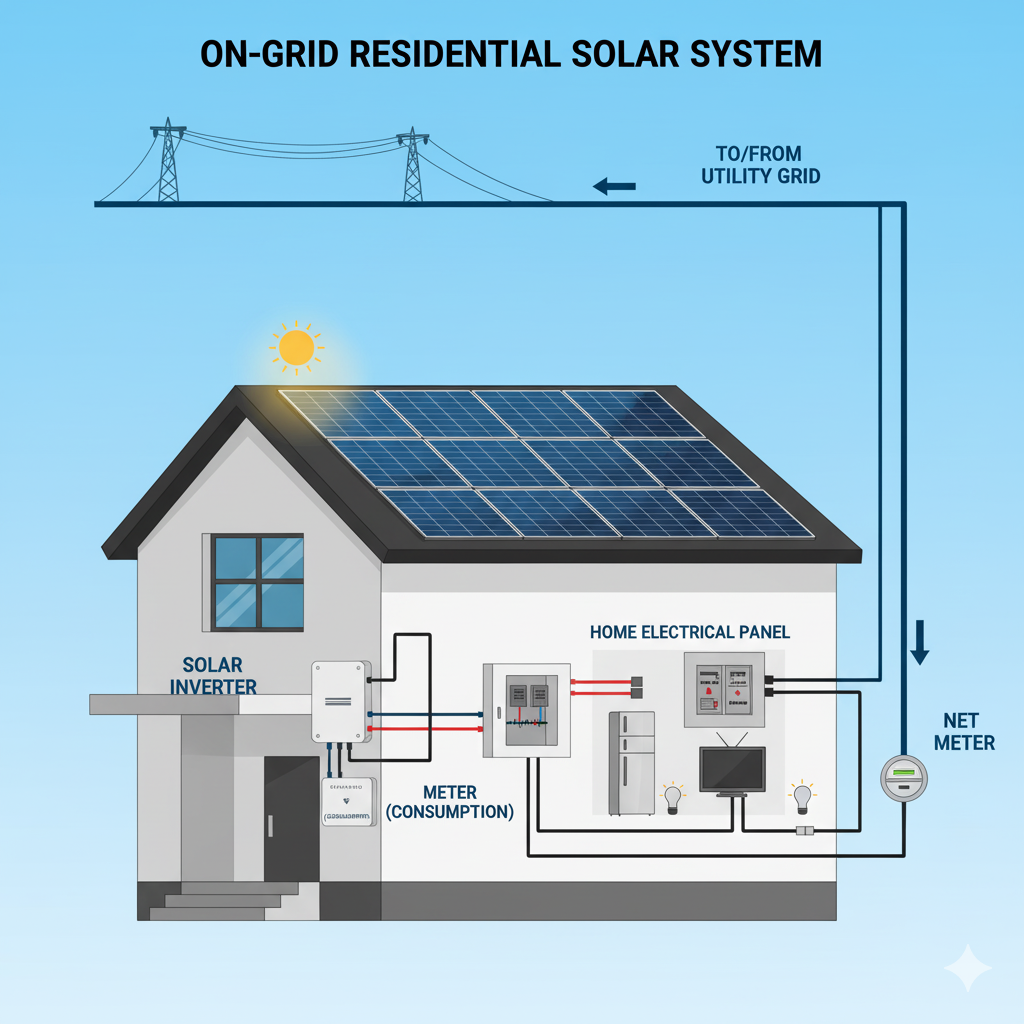
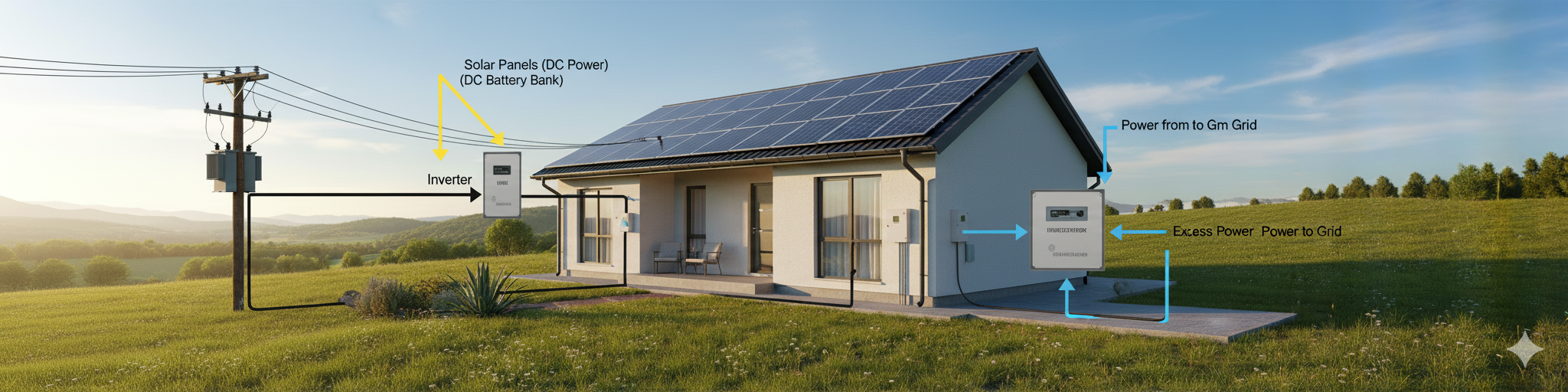
An on-grid solar system, also called a grid-tied solar system, works in tandem with your local electricity grid. It generates electricity from sunlight using solar panels and immediately powers your home or business.
Excess electricity is fed back into the grid, allowing you to earn energy credits through net metering. This makes on-grid solar the most cost-effective choice for most urban and semi-urban Indian households.
When to Use an On-Grid Solar System?
On-grid solar systems are ideal if:
You have a reliable electricity grid connection.
You want to reduce electricity bills and benefit from net metering.
You aim for low-maintenance solar power without batteries.
Most Indian households benefit more from on-grid systems because they are easier to maintain and provide a faster return on investment.
Components of an Off-Grid Solar System
1. Solar Panels
Solar panels capture sunlight and convert it into electricity. Panel types include:
Monocrystalline – high efficiency, single silicon crystal.
Polycrystalline – cost-effective, multiple silicon crystals.
Bifacial – generates electricity from both sides for higher output.
2. Solar Inverter
The on-grid inverter converts DC electricity from solar panels into AC electricity compatible with household appliances. It also synchronizes with the grid to feed excess power.
3. Grid Connection & Net Metering
The system connects to your electricity provider through a net meter, which records the power exported to and imported from the grid. This allows you to reduce electricity bills and earn credits for surplus energy.
4. Mounting Structures
Panels must be installed at an optimal tilt and angle for maximum sunlight exposure. High-quality mounting structures ensure long-term stability and safety.
5. Solar Accessories
Accessories ensure safe operation and system longevity:
DC & AC cables
Combiner boxes
MC4 connectors
Earthing and conduit trays
Lightning protection
How Does an Off-Grid Solar System Work?
Sunlight Absorption – PV cells in the panels convert sunlight into DC electricity.
DC to AC Conversion – The on-grid inverter converts DC to AC for household appliances.
Grid Synchronization – Any surplus electricity is fed into the utility grid via the net meter.
Power Usage & Credit – Your home consumes solar electricity first; any excess is credited to your account for later use.
Advantages of Off-Grid Solar Systems
Lower Initial Cost: No batteries required, making it more affordable than off-grid systems.
Reduced Electricity Bills: Feed surplus energy to the grid to earn energy credits.
Low Maintenance: Fewer components and no battery replacements.
Government Subsidy: Eligible for subsidies under PM Surya Ghar Muft Bijli Yojana or state schemes.
Fast ROI: Typically recovers the investment in 3-4 years.
Disadvantages of Off-Grid Solar Systems
Dependent on the Grid: Won’t supply electricity during grid outages unless paired with a backup system.
No Energy Storage: Requires a separate battery solution if you need power during nighttime or blackouts.
Net Metering Approval: Installation requires approval from your electricity provider.
Off-Grid vs On-Grid Solar Systems
On-Grid Solar: Cost-effective, low maintenance, eligible for subsidies, allows net metering, but depends on the grid.
Off-Grid Solar: Works independently of the grid, ideal for remote areas or frequent outages, but higher maintenance and longer ROI.
Conclusion
An on-grid solar system is the perfect choice for urban and semi-urban households with reliable electricity. It reduces electricity bills, provides a fast return on investment, and contributes to a sustainable, pollution-free energy future.