
OFF-GRID SOLAR SYSTEM
Off-Grid Solar System Buying Guide: Working, Components, Pros and Cons

About SabSolar
At SabSolar, we are driven by the vision to make clean energy accessible to every home and business. Founded with the mission to reduce pollution and promote sustainable energy, we specialize in designing and installing advanced solar solutions for residential, commercial, and industrial setups.
Our core values revolve around customer satisfaction, innovation, and quality. We provide:
Free solar consultation to help you choose the right system.
Durable and high-quality mounting structures designed to withstand extreme weather conditions.
Quick system design with 3D rooftop modeling in just 15 minutes.
Flexible financing and EMI schemes, including zero-cost options.
Comprehensive AMC services to ensure hassle-free solar operation.
We aim to make solar adoption seamless, efficient, and rewarding for every customer.
What is an Off-Grid Solar System?
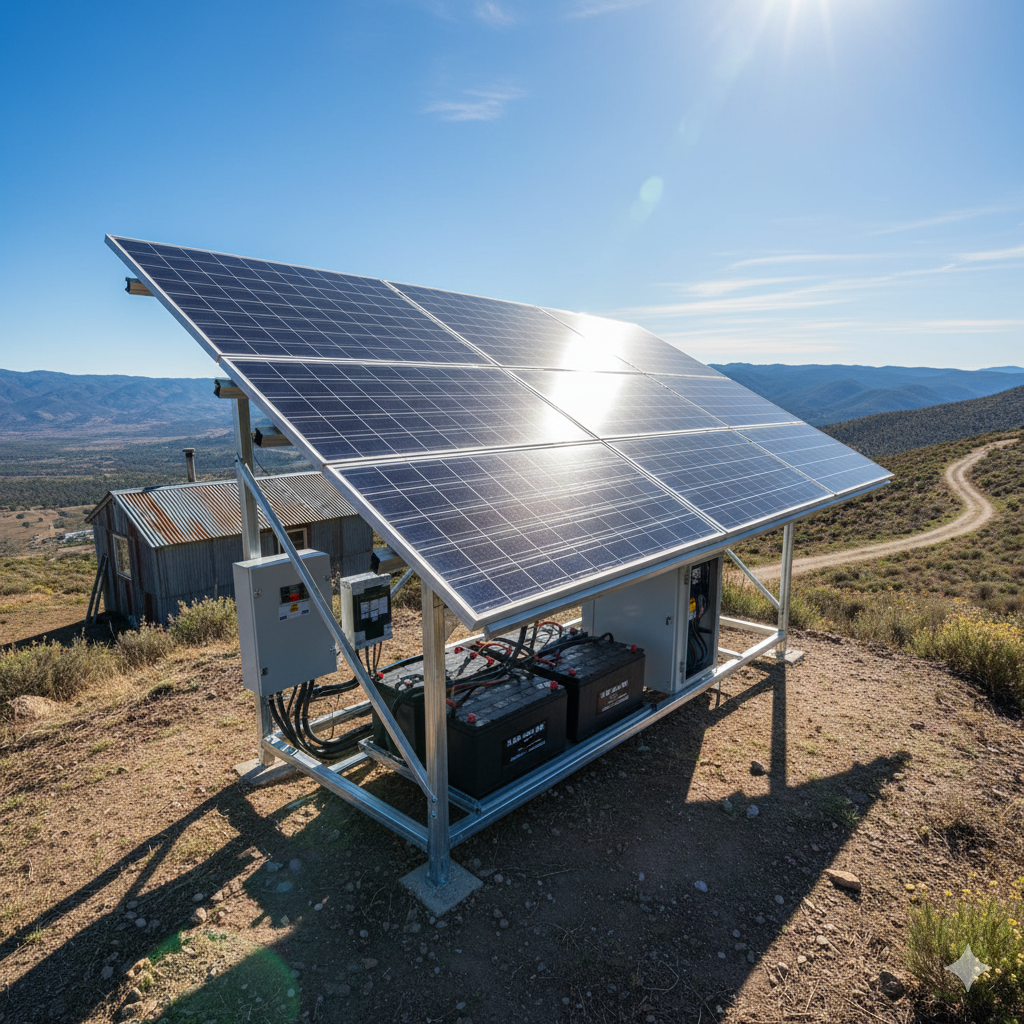
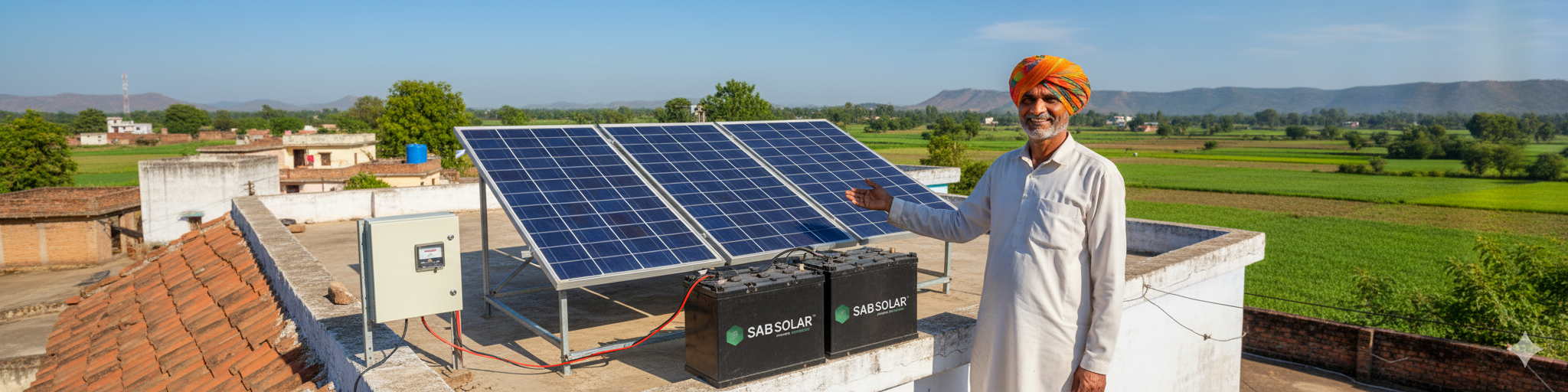
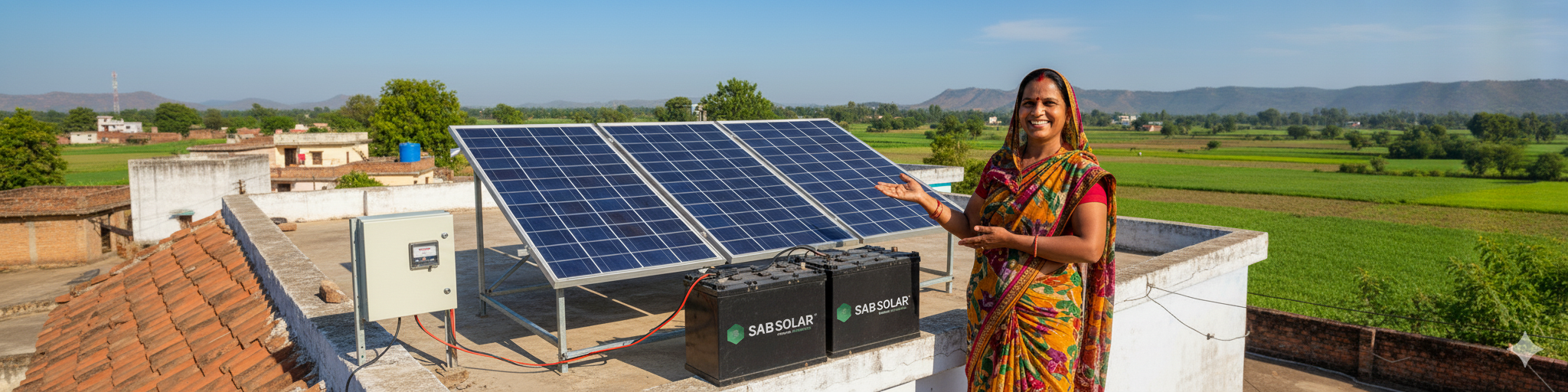
An off-grid solar system is a standalone setup that produces and stores electricity independently, without relying on the public utility grid. These systems are designed to provide power where the grid is unreliable or unavailable.
The system works by storing electricity generated during the day in batteries, which can then be used to power your home or business at night.
When to Use an Off-Grid Solar System?
Most Indian households benefit more from on-grid solar systems, which are simpler and more cost-effective. However, off-grid solar systems are ideal if:
You live in remote areas with no electricity grid.
Your area faces frequent or prolonged power cuts.
You require complete energy independence.
Components of an Off-Grid Solar System
1. Solar Panels
Solar panels are made of photovoltaic (PV) cells that capture sunlight and convert it into electricity. They can be:
-
Monocrystalline – single silicon crystal, high efficiency.
-
Polycrystalline – multiple silicon crystals, cost-effective.
-
Bifacial – generates electricity from both sides for higher output.
2. Solar Inverter
The inverter converts DC electricity from solar panels into AC electricity used by household appliances. In off-grid systems, the inverter is a critical component for uninterrupted power supply.
3. Batteries
Batteries store excess electricity generated during the day for use at night or during low sunlight. Common types include lead-acid and lithium-ion, each with specific charging requirements.
4. Charge Controller
The charge controller regulates the flow of electricity from panels to batteries and prevents overcharging. Many modern controllers also optimize power output using Maximum Power Point Tracking (MPPT) technology.
5. Mounting Structures
Panels must be installed at optimal tilt and angle for maximum sunlight absorption. Durable mounting structures ensure stability and longevity of the system.
6. Solar Accessories
These include essential components for system safety and connectivity:
-
DC & AC cables
-
Combiner boxes
-
MC4 connectors
-
Earthing and conduit trays
-
Lightning protection
How Does an Off-Grid Solar System Work?
Sunlight Absorption – PV cells convert sunlight into DC electricity.
Combiner Box Aggregation – Multiple panel strings are combined, with individual protection via fuses or breakers.
Charge Controller Regulation – Optimizes panel output and manages battery charging in multiple stages.
Battery Storage – Electricity is stored in batteries for nighttime or backup use.
Inverter Conversion – DC power from batteries is converted into AC for household appliances.
Power Delivery – AC electricity is supplied to your home through the breaker panel, sometimes via an Automatic Transfer Switch (ATS) for backup integration.
Advantages of Off-Grid Solar Systems
Energy Independence: Perfect for areas without a reliable grid.
Clean and Green: Zero-emission energy that reduces your carbon footprint.
Reliable Backup: Provides power during outages, ensuring uninterrupted electricity.
Disadvantages of Off-Grid Solar Systems
Higher Initial Investment: Batteries and inverters increase system cost.
Maintenance Requirements: Batteries require periodic replacement.
No Government Subsidy: Subsidies are only available for on-grid solar systems.
Longer ROI: Break-even period is longer compared to on-grid systems.
Off-Grid vs On-Grid Solar Systems
On-Grid Solar: Cost-effective, lower maintenance, eligible for government subsidies, and allows net metering for excess electricity.
Off-Grid Solar: Ideal for areas with no grid access or frequent outages; requires higher investment and maintenance but offers complete energy independence.
Conclusion
Installing an off-grid solar system is the ideal choice for homes, industries, and businesses in areas with no reliable grid connection. While it requires a higher initial investment and ongoing battery maintenance, it guarantees energy independence and a sustainable, pollution-free power solution.